
How to Choose a Hydraulic Piston Seal
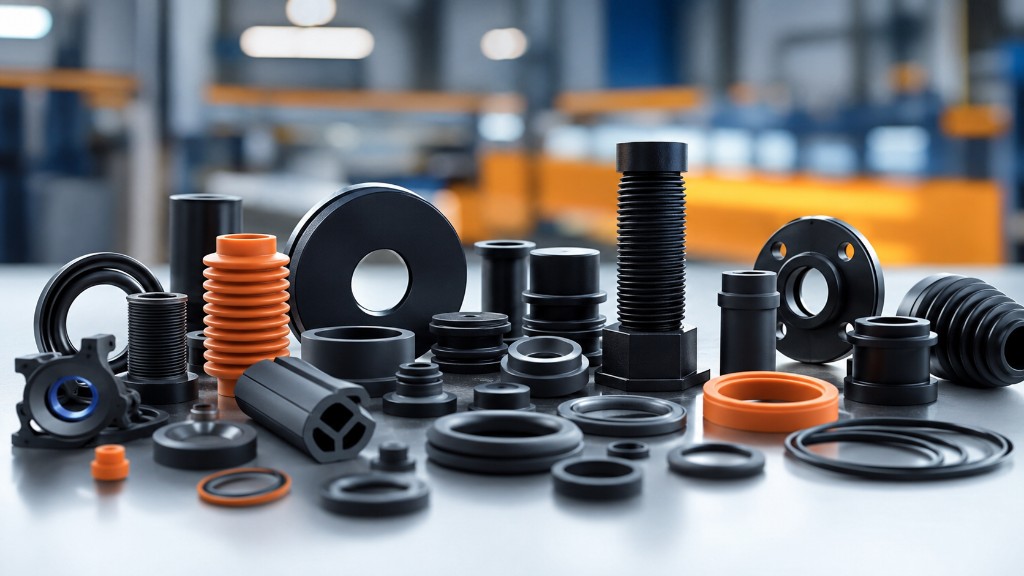
In hydraulic systems the piston seal is one of the most critical components: it maintains pressure inside the cylinder and prevents leakage. The wrong seal means energy loss, oil leaks, early failure and downtime. Ada Kauçuk supplies KASTAŞ products for many industries in its hydraulic piston seals category.
Key criteria for choosing a hydraulic piston seal
- Operating pressure: Continuous and peak pressure values determine the seal type.
- Speed: Stroke speed directly affects the choice of rubber compound and seal geometry.
- Temperature: FKM is preferred at high temperatures and special NBR compounds at low temperatures.
- Environment: Oil type, dust, chemicals and UV exposure change the material choice.
- Stroke length and side load: A single seal or a combination of seals may be needed.
The difference between hydraulic piston and rod seals
Piston seals contact the cylinder bore and form a pressure barrier. Hydraulic rod seals form the barrier between the system and the outside world where the rod exits. Both groups work together in a hydraulic cylinder; choosing only one of them correctly is not enough.
Recommendations by industry
Duty cycles and shock loads differ between construction machinery, mobile hydraulics, agricultural equipment and press systems. See our industries page for solutions suited to your application, and use our product catalogue to find the right group.
Installation and maintenance tips
- Clean the seal and groove surfaces before installation.
- Do not use sharp-edged tools; do not damage the sealing lips.
- Increase pressure gradually on first start-up.
- Check oil contamination according to ISO 4406.
Choosing the right seal with Ada Kauçuk
We provide technical support on hydraulic sealing at our facilities in Ostim and İvedik, Ankara. Share your application data and we can point you to the right KASTAŞ product code. Follow our blog for more technical content.
Internal or external leak? Telling them apart
The first step with any hydraulic cylinder fault is to find out which way the leak is going, because the solution depends entirely on it.
An external leak is visible: oil seeps out where the rod exits, and the cylinder body and the ground beneath it get oily. The rod-side seals are responsible.
An internal leak is invisible. The symptoms are: the cylinder cannot hold its load and gradually drifts down, the pump has to run longer to do the same work, and the system runs hotter than normal. In this situation the piston seal is the suspect. A simple check is to run the cylinder to full stroke, close the line and see whether the load is held.
Single profile or compact set?
Piston sealing can be achieved with two different arrangements, and the choice usually depends on groove width.
Single profiles seal with one element. They are easy to fit and easy to stock, and are sufficient for medium-pressure, low-cycle applications.
Compact sets combine the sealing element, back-up ring and guiding function in one assembly. They reduce the risk of extrusion at high pressure, cope better with side loads and fit more performance into narrow grooves. In return they cost more and the fitting sequence is more critical.
If your cylinder cycles frequently, works at high pressure or carries a heavy load on its end, a compact set usually gives a longer life.
From measurements to the right part
If the code on the removed seal is unreadable, you can search by piston diameter, groove diameter and groove width in the size finder. For catalogue products with technical drawings, the size tables on the hydraulic piston seals page can also be used.