
O-rings
1 product
Categories
About o-rings
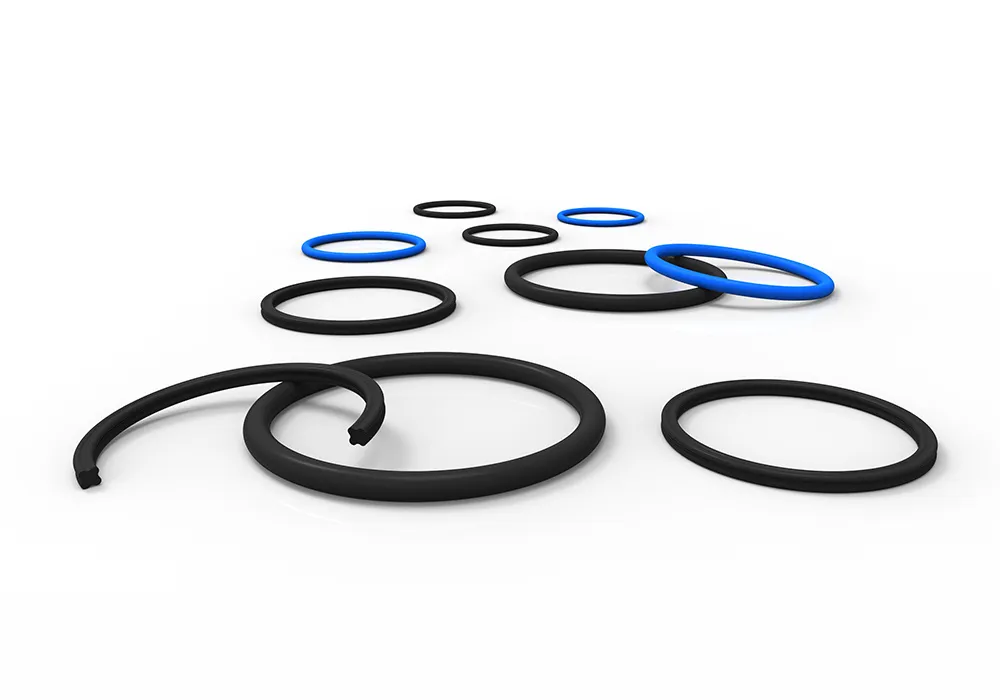
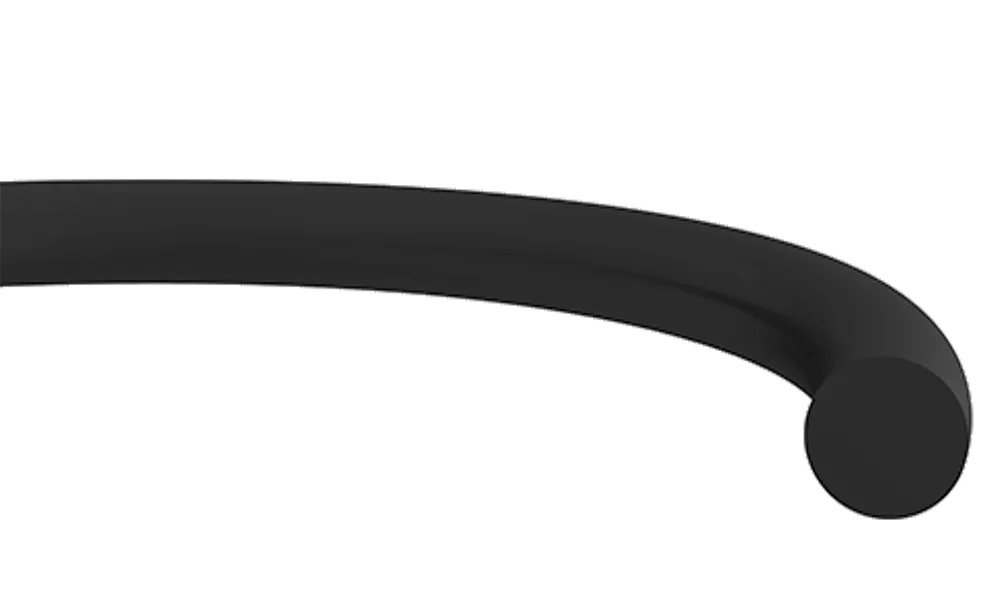
An O-ring is an elastomer ring with a circular cross-section and the most widely used sealing element in industry. Its strength lies in its simplicity: fitted in its groove it is compressed by a set amount, and as pressure rises it is pushed against the groove wall, so the seal reinforces itself. The same element can be used in static and dynamic applications.
An O-ring is defined by three dimensions: inner diameter, cross-section and the outer diameter derived from them. Two major standard systems are used for sizing — the inch-based AS568 and the metric DIN 3771 / ISO 3601. Because the same physical size can carry different codes in the two systems, it is important to be clear which standard we are talking about when ordering.
Material selection matters as much as size and depends on compatibility with the fluid. NBR is the standard, economical choice for mineral-oil and hydraulic-oil systems. FKM (Viton) is used where resistance to high temperatures and aggressive chemicals is required. EPDM performs well with water, steam and brake fluid but must not be used with mineral oil. Silicone is chosen for static applications that need a wide temperature range and food compatibility.
At high pressure a back-up ring is placed behind the O-ring to stop it extruding into the clearance gap. In dynamic applications where the cross-section tends to twist, switching to an X-ring profile gives a more stable solution.
The range of applications is almost unlimited: hydraulic and pneumatic valve blocks, pump housings, fittings, cylinder end caps, food and pharmaceutical equipment, automotive and household appliance parts. This ubiquity brings a risk: two O-rings that look identical may be made of different materials, and the wrong material goes unnoticed until it shows itself by swelling, hardening or cracking. Keeping materials separate in stock is therefore just as important as keeping sizes separate.
We supply O-rings from our base in OSTİM, Ankara, and provide technical support with size and material selection.
O-ring size chart
The 3,417 O-ring sizes we supply are listed on a separate page, organised by cross-section. Measure the cross-section of your part and find your size among the inner diameters in that series.
Frequently Asked Questions
How do I determine an O-ring size?
Measure the inner diameter and the cross-section; the outer diameter follows from these two. It is important to measure an unused or undeformed part, because an O-ring that has been under pressure may have taken a permanent set.
What is the difference between AS568 and DIN 3771?
AS568 is the inch-based American standard; DIN 3771 (now ISO 3601) is the metric European standard. The same physical size can have different codes in the two systems, so when ordering it is safest to state either the standard or the dimensions in millimetres.
Should I choose NBR or FKM?
NBR is the standard, economical choice for mineral-oil and hydraulic-oil systems. FKM is used where resistance to high temperatures and aggressive chemicals is required. EPDM suits water and steam but must not be used with mineral oil. Tell us your fluid and temperature and we will choose the right material together.
Is an X-ring better than an O-ring?
In dynamic applications, yes. With its four-lip cross-section an X-ring sits more stably in the groove and is less prone to twisting (rolling) in motion, which usually means a longer life. For static applications an O-ring is sufficient in most cases.