
O-Ring Size and Material Selection Guide
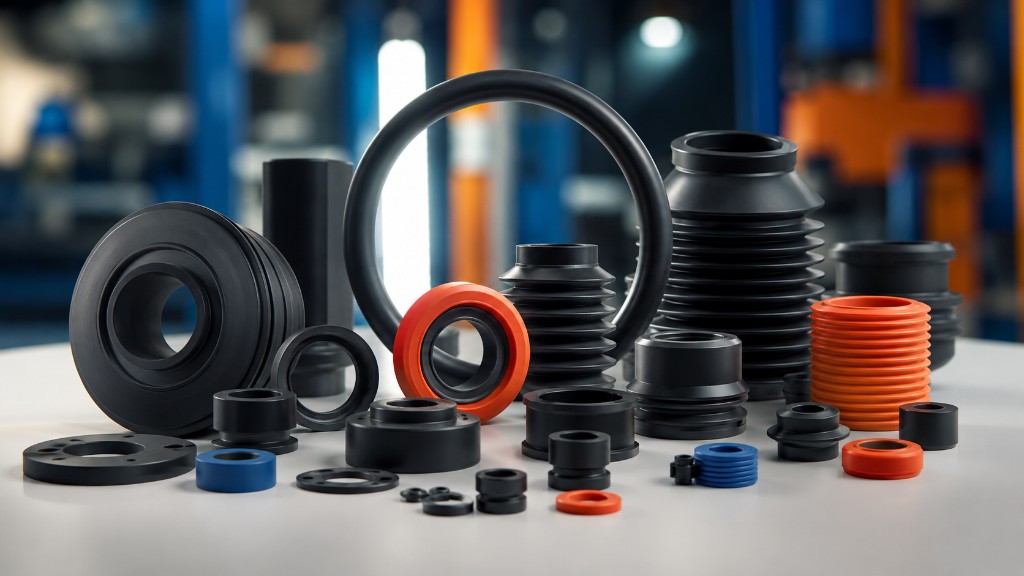
The O-ring is the most widely used sealing element in static and dynamic applications. Choosing the right O-ring size and material matters even more than avoiding installation errors. You can find different cross-sections and materials in our O-ring category.
How is an O-ring size determined?
- Inner diameter (ID): Calculated from the groove bottom diameter.
- Cross-section (CS): Determines the squeeze and sealing performance.
- Squeeze: In static applications a range of 15–30% is generally targeted.
- Expansion allowance: Leave room for thermal expansion in hot environments.
Material selection: NBR, FKM, EPDM
NBR is an economical, reliable option for hydraulic applications with mineral oil. FKM (Viton) is preferred where high temperature and chemical resistance are required. EPDM stands out with brake fluid, steam and ozone. Choosing a material before your operating environment is clear leads to early failure.
Avoid installation errors
- Do not pull the O-ring over sharp edges.
- Do not use silicone-based lubricants with NBR.
- Check the groove surface finish (Ra).
- Fit the seal without overstretching it.
O-rings in static sealing
O-rings are widely used together with static sealing elements in flange joints, cover seals and valve bodies. You can filter by size and material in our product catalogue.
AS568 and DIN 3771: same size, different number
Two major standard systems are used for O-ring sizing. AS568 is the inch-based American standard and refers to sizes with three-digit codes called "dash numbers". DIN 3771 — today ISO 3601 — is the metric European standard and states the size directly in millimetres.
The confusion comes from the fact that both systems use three-digit codes, but the same number corresponds to different sizes. If only the code is given over the phone and it is not clear which standard is meant, the wrong part arrives. The safest approach is to give the inner diameter and cross-section in millimetres alongside the code.
Cross-sections also differ by standard. AS568 series show decimal values converted from inches, such as 1.78 · 2.62 · 3.53 · 5.33 · 6.99 mm. Metric series are dominated by whole numbers such as 1.5 · 2 · 2.5 · 3 · 4 · 5 · 6 mm. When you measure the cross-section of your part, whichever group the result is closest to largely tells you which system the part comes from.
What does Shore hardness change?
"70 Shore", "75 Shore" or "90 Shore" next to the material name indicates the hardness of the elastomer. This value directly affects seal life but works against intuition: harder is not always better.
- 70 Shore is the general-purpose standard. Being soft, it fills surface irregularities well and gives reliable sealing at low and medium pressure.
- 90 Shore is for high pressure. As pressure rises the elastomer starts to flow (extrude) into the clearance gap; hard material resists this. But a hard seal fills surface irregularities less easily, so groove surface finish becomes more important.
- 75 Shore is an intermediate value common for Viton (FKM) seals, used where chemical resistance comes first.
Instead of increasing hardness at high pressure, using a 70 Shore seal with a back-up ring is another solution. Which way is right depends on the groove geometry and the pressure profile.
Find the size from the part in your hand
If the code is unreadable, working from the dimensions is the fastest way. Enter the inner diameter and cross-section in our size finder and it lists the sizes that match within the tolerance, together with material and hardness. If nothing matches, it widens the tolerance and suggests the closest alternatives — useful in practice, since a calliper measurement taken in the field can be half a millimetre out.
For details on supply and delivery, contact us.
Size chart: which diameters exist in which cross-section?
The most practical way to choose a size is to determine the cross-section first and then look at the inner diameters in that series. We have organised the 3,417 O-ring sizes we supply into 62 cross-section series: O-ring size chart.
For each cross-section the chart lists every inner diameter available in it. Click a size and the size finder opens with that value, showing material and hardness options.
Cross-section series have two origins. Decimal values such as 1.78 · 2.62 · 3.53 · 5.33 · 6.99 mm are converted from the inch-based AS568 standard. Whole numbers such as 2 · 3 · 4 · 5 · 6 mm are the metric DIN 3771 / ISO 3601 series. The number you get when measuring your part's cross-section largely tells you which system you are working with — which makes finding the right equivalent easier.
From an unreadable part to a size
The most common situation in the field is that the code on a removed O-ring cannot be read. Then the only way is to measure:
- Find an unused sample. A seal that has been under pressure in its groove for a long time takes a permanent set: its cross-section flattens and its inner diameter grows. A measurement taken from such a part will point you to the next size up or down.
- Measure the inner diameter and cross-section. You do not need to measure the outer diameter; it is calculated from the other two.
- Note the fluid. Even if the size is right, the wrong material will soon bring the failure back.
With these three pieces of information, the size finder lists the records that match within the tolerance; if there is no exact match, it suggests the closest sizes. Because a calliper measurement can be half a millimetre out, this step is useful in practice.
Ada Kauçuk's advice
If you have a size card or a sample, we can quickly match the right O-ring alternative. For sealing performance, always verify the material after the size.